

This case study spotlights Forestree Collective, a small California‑based business whose circular, restoration‑driven model is rebuilding Sonoma County’s wood‑products infrastructure while advancing wildfire resilience and ecological restoration. By transforming small‑diameter and underutilized timber into high‑value furniture, interiors, and an emerging Nail‑Laminated Timber (NLT) building system, Forestree is creating new economic incentives for stewardship and demonstrating how rural economies and forest health can reinforce one another. The case study examines Forestree’s integrated mill‑to‑manufacturing workflow, its research partnerships with UC Berkeley and Regenerative Forest Solutions, and its role in launching Timbershed—a public‑private effort to restore regional milling capacity.
Introduction
A century of unsustainable logging followed by decades of aggressive fire suppression have left much of California’s forestland dangerously overgrown and lacking diversity — conditions that fuel catastrophic wildfires, threaten communities, and erode the long‑term resilience of the state’s forest ecosystems. In Sonoma County, these vulnerabilities have been tragically underscored by multiple wildfires, including the Tubbs (2017), Kincade (2019), and Glass Fires (2020), which together destroyed thousands of homes, displaced tens of thousands of residents, and caused billions of dollars in damages—leaving lasting scars on the County’s people, economy, and forests.
Forest management practices—such as thinning overcrowded stands, conducting prescribed burns, and reducing fuel loads—are critical to restoring forests into more resilient, low-density structures less prone to wildfires. Yet in Sonoma County and across California, scaling these practices remains difficult. Current market incentives do not support the removal of small-diameter or non‑merchantable timber, as the costs of harvesting, hauling, and processing typically exceed potential returns. In addition, sawmill processing facilities are limited and creating a general bottleneck for wood processing across size classes and species. Without new value streams for low‑value wood, and processing capacity, large‑scale fuel reduction and ecological restoration will remain financially out of reach, constrained to what limited public funding can support.
Forestree Collective, founded in 2021 by building scientist Jeremy Fisher and architect Marisha Farnsworth, is pioneering circular, market‑based solutions to the wildfire crisis. This case study highlights Forestree’s work to rebuild Sonoma County’s wood products infrastructure and to transform non‑merchantable timber and restoration byproducts into climate‑smart, value‑added materials. By creating new economic incentives for stewardship, Forestree contributes to reducing wildfire risk and restoring forests while opening pathways for rural economic renewal.
Reviving the Mill: A Hub for Circular Timber Innovation
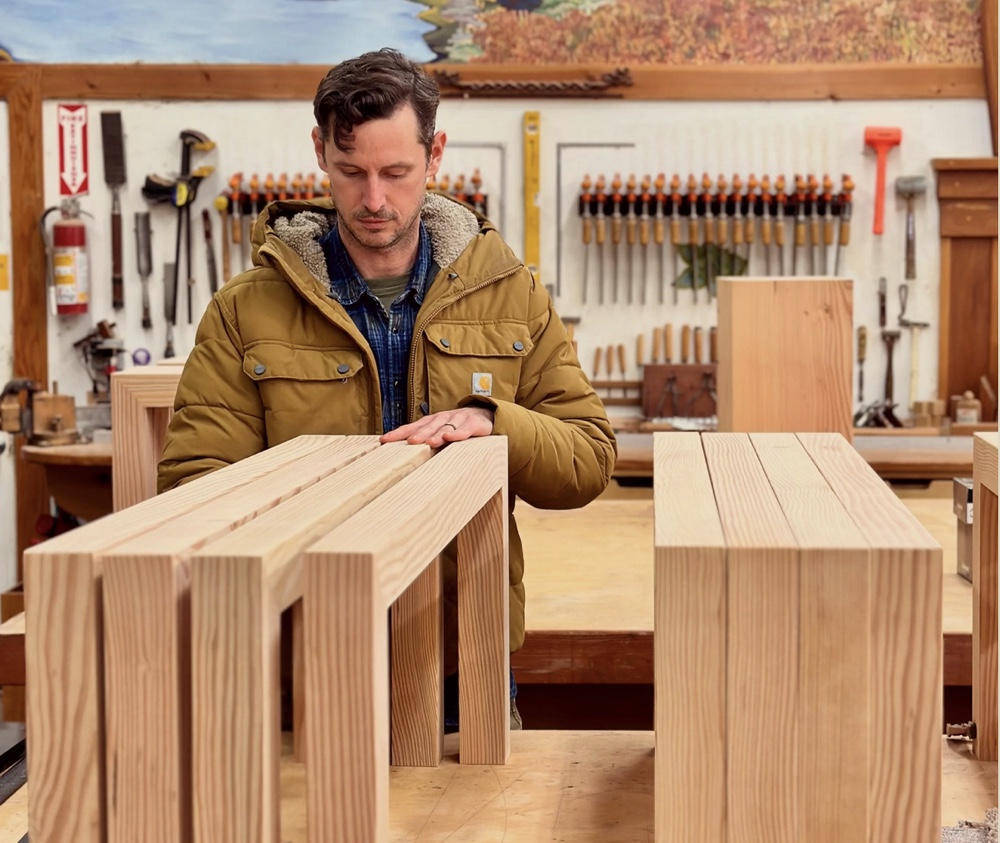
Forestree Collective’s mill in Sebastopol, CA, and woodshop in Penngrove, CA, create a circular, market-based approach to forest restoration. The 172-acre historic mill property has been upgraded to include a Woodlandia 200XP single-pass log ripper to process small-diameter logs, a Woodmizer LT-40 Wide portable bandsaw mill for larger logs, and a compact telehandler. Forestree also has a fully equipped 5,000-square-foot woodshop for secondary wood products manufacturing, including a kiln drying operation with a solar kiln built out of their own mass timber product, nail laminated timber (NLT), and a dehumidification kiln. Shop equipment includes table saws, jointers, planers, panel saw, bandsaw, shaper and a wide belt sander.
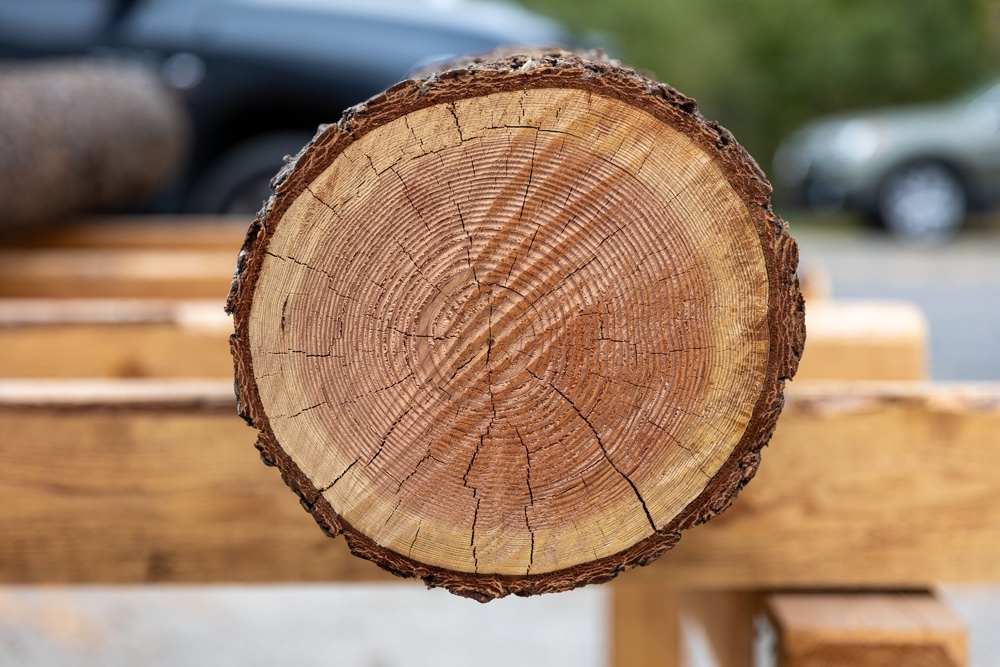
Forestree’s vertically integrated process functions as a closed-loop system. Small-diameter trees (6 inches and larger)—responsibly sourced through partnerships with local landowners and foresters—are milled in-house, solar-kiln-dried, and transformed into value-added products in the wood shop. Each stage of production builds on the one before it: restoration yields raw material; milling produces dimensional lumber; the wood shop converts that lumber into finished goods. This integrated flow ensures consistent quality, reduces waste and energy use, and provides a reliable supply chain for climate-smart materials.
Restoration by Design
Forestree Collective is redefining how restoration wood moves through the value chain by linking forest health directly to wood products innovation. Through a fully circular model, small-diameter and underutilized logs removed during thinning and fuel-reduction projects are transformed into durable, high-value products that extend the life of the material, lock carbon into long-lived form, and create new incentives for stewardship. Forestree is currently advancing two complementary product lines—climate-smart furniture and custom interiors and an innovative mass Nail-Laminated Timber (NLT) system—each expanding the circular model and opening new markets for regenerative, restoration-driven wood products.
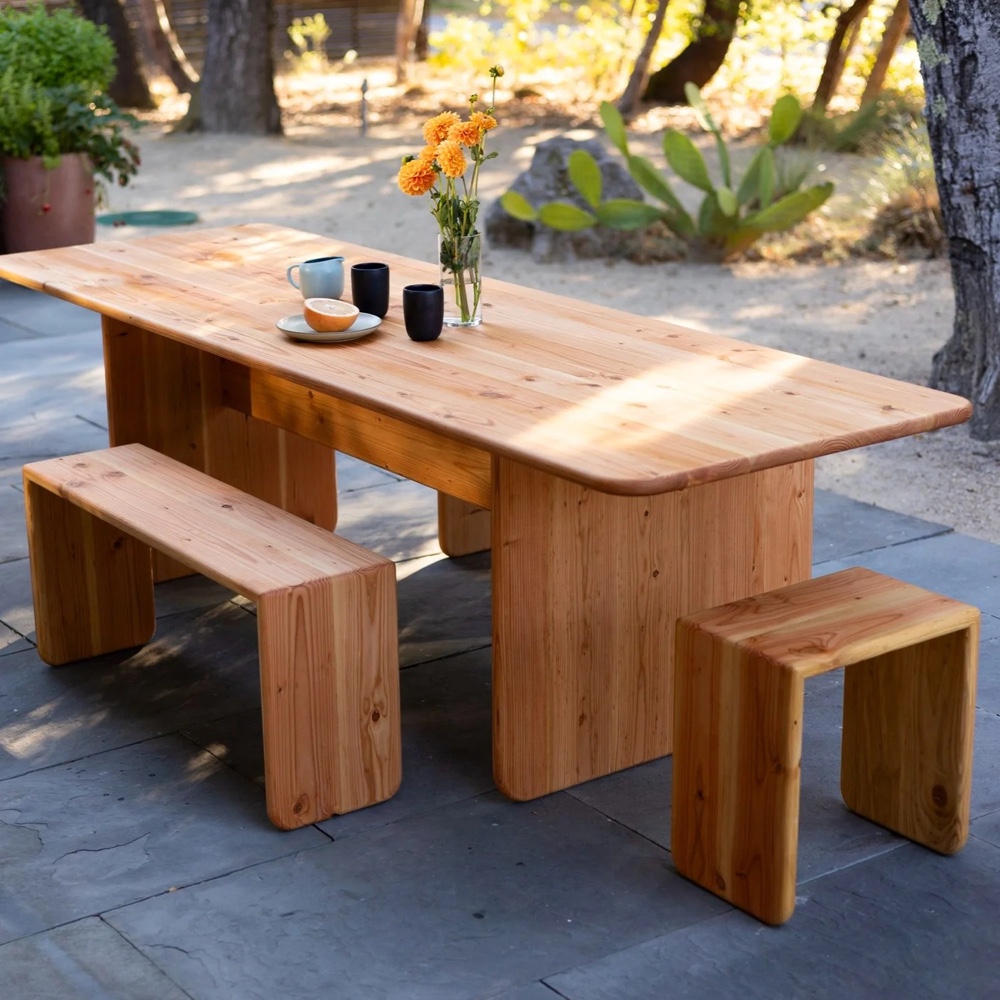
Climate-smart furniture and custom interiors are Forestree Collective’s first expression of its circular, restoration-driven approach to material innovation. Restoration-grade material from fuel-reduction and forest health projects, are turned into high-quality furniture and architectural elements for commercial and residential spaces.
Design and craft are integrated from the outset: Forestree’s architects, designers, and fabricators apply species-specific milling and woodworking techniques to create durable, regionally distinctive pieces that embody place, lock carbon into long-lived form, and connect end users to the landscapes that produced them. Beyond the finished products themselves, this approach builds new economic pathways by converting low-value and underutilized biomass into premium goods that help fund restoration work, support local mills and craftspeople, and expand markets for diverse, regionally sourced species.
In parallel with its furniture and interiors line, Forestree Collective is developing an innovative Nail-Laminated Timber (NLT) building system that brings the same circular logic to mass-timber construction. NLT offers a low-barrier, adhesive-free mass-timber solution that is well-suited to small-scale and decentralized milling operations. Forestree’s model enables restoration wood to be processed near where it is harvested in Sonoma County, reducing transportation costs, retaining more value in the local community, and creating viable markets for small-diameter and underutilized logs that are often burned or left to decay.
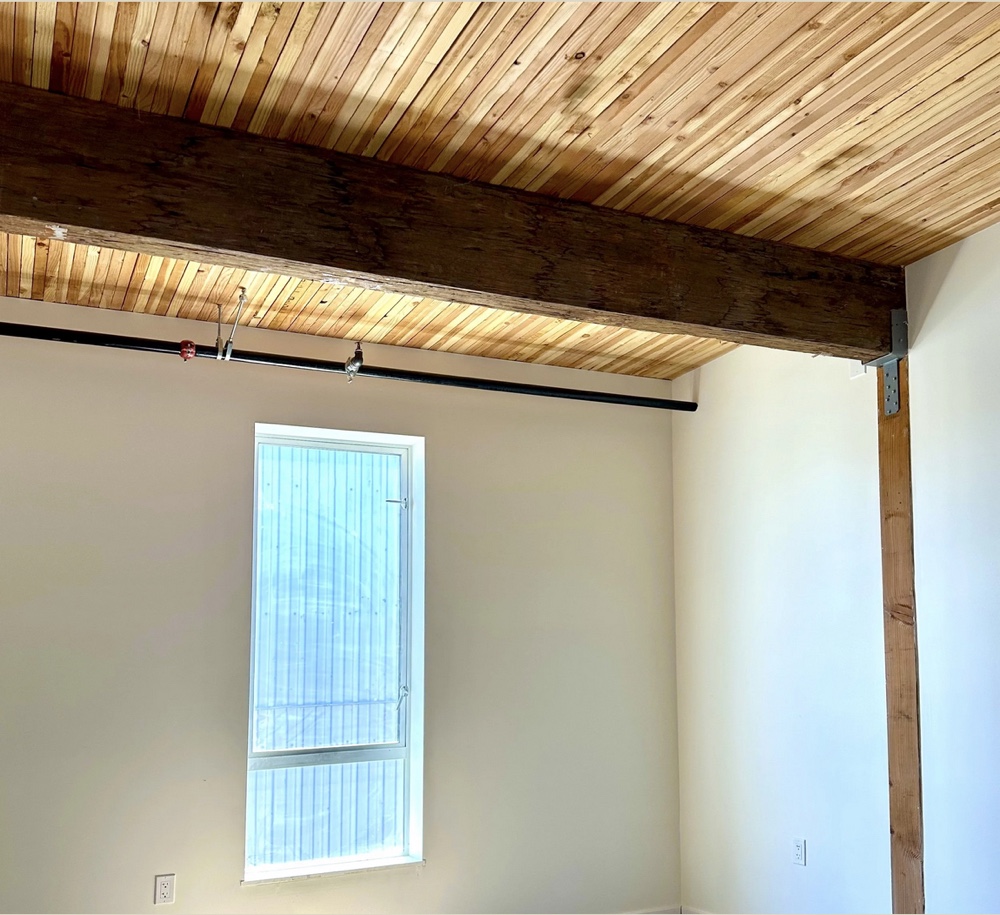
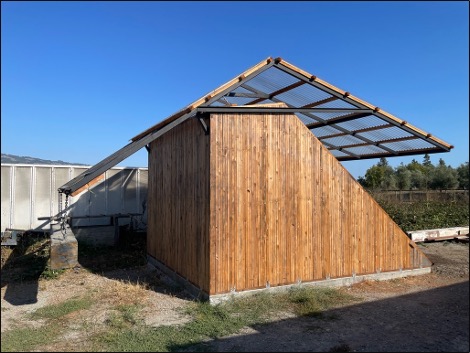
Despite its inclusion in building codes and long history of use, NLT remains underutilized due to gaps in research, manufacturing guidance, and real-world demonstrations. Forestree is addressing these barriers through a partnership with the Berkeley Wood Lab at the University of California’s College of Agriculture and Natural Resources (UC ANR) and the nonprofit Regenerative Forest Solutions (RFS). Together, the team is advancing structural research, optimizing low-cost fabrication methods, sustainable procurement, and producing demonstration projects that validate performance and expand market confidence. Their pilot NLT project was a solar kiln (pictured below) using Lignoloc wooden nails as fasteners.
Current R&D focuses on using locally sourced, non-merchantable timber—milled and kiln-dried by Forestree—then assembled into prototype panels for testing. Dr. Paul Mayencourt of the Berkeley Wood Lab is working with Forestree Collective to help balance cost, ecological value, and carbon benefits—for example, by strategically intermixing species, grades, and dimensions to maximize use of lower‑grade material while meeting performance requirements. RFS conducted a feasibility study that Forestree is using to inform the procurement of material for its primary and secondary wood products.
The Power of Partnerships
Forestree Collective’s collaboration with public agencies, academic institutions, nonprofit organizations, and local communities has been a major driver of its early success. The company’s first success was being awarded the Sonoma County Bio Business competition in 2021 that helped launch the business, elevated the company’s profile and provided financial and technical resources.
The California Department of Forestry and Fire Protection (CAL FIRE) and the U.S. Forest Service (USFS) have recognized and supported Forestree’s innovative work with grants that have helped Forestree expand their milling and manufacturing capacity and enabled them to pilot its NLT building system.
Collaboration with the UC Berkeley Wood Lab has proven vital to Forestree’s advancement of its NLT system. From structural testing to design applications, this partnership bridges science, craft, and sustainability, helping to shape a more resilient and diversified wood economy and ensuring that research outcomes are translated into practical applications for the regional wood products sector.
Local government and nonprofit partnerships also play an important role in Forestree’s work, including its stewardship of the 85-acre forest adjacent to the mill site. With CFIP funding and a forest management plan in place, Forestree collaborates with Fire Forward, the Gold Ridge Resource Conservation District, Regenerative Forest Solutions (RFS), CAL FIRE, UC Cooperative Extension, and the US Forest Service.
Environmental and Economic Impacts
Forestree Collective’s integrated approach—reviving critical infrastructure, creating durable markets for restoration byproducts, innovating new sustainable products, and generating local jobs—illustrates how healthier forests, safer communities, and local prosperity can advance hand in hand.
A central impact of Forestree’s work is the revival of wood-products infrastructure in Sonoma County. Forestree Collective, along with RFS, has recently launched Timbershed, a public private partnership that intends to reopen a mothballed mill and transform it into a flagship wood products campus for Sonoma County with capacity to process up to six million board feet (MMbf) of timber each year.
Preliminary figures from a recent feasibility study indicate a high-production NLT facility would use at least one million board feet of small-diameter timber annually—equivalent to treating roughly 250 acres of forest, or nearly 10% of the estimated yearly fuel-reduction output from non-industrial private forests in Sonoma County. By sourcing timber directly from local thinning and fuel-reduction treatments, Forestree Collective is contributing to wildfire resilience in its own backyard.
To date, Forestree Collective has created 3 full-time and 6 part-time jobs in forestry, log hauling, milling and manufacturing sectors. At full capacity, the planned Timbershed wood products campus would generate an additional 40 FTE direct, and 77 indirect jobs, further strengthening Sonoma County’s economy and tying the community to sustainable forest management. These positions represent more than employment—they embody a commitment to community resilience and sustainable livelihoods tied to the stewardship of California’s forests.
Challenges Facing Restoration‑Focused Wood Enterprises
Restoration‑focused wood enterprises like Forestree Collective operate in a landscape shaped by rising wildfire risk, growing demand for sustainable materials, and decades of underinvestment in rural forest‑products infrastructure. These businesses must navigate fragmented supply chains, limited processing capacity, and high operational costs. At the same time, they face uncertain markets for small‑diameter logs and by‑products, which remain inconsistent or underdeveloped despite being the primary outputs of ecological thinning. When sourcing from small private forest landowners, added administrative requirements and permitting complexity can slow project timelines and increase overhead costs. Tight margins and limited access to capital further constrain their ability to invest in equipment, facilities, or workforce expansion.
Layered on top of these structural challenges are California’s Forest Practice Rules (FPRs), which were designed to prevent destructive logging but apply uniformly to all operators regardless of scale or intent. For landowners with substantial timber resources to manage, this means navigating costly Timber Harvesting Plans that require professional foresters, legal review, and months of permitting — costs that exceed the value of the small‑diameter timber involved. Approval timelines and permitting review processes are notorious for delaying urgent wildfire‑recovery and fuel‑reduction work and led to a temporary pause in requirements in CA in 2025 to speed implementation that has generally lagged behind state-mandated goals. Because the rules were built around large commercial harvests, they offer limited flexibility for commercialization of material derived from ecological thinning as the rules apply even to low‑value or “waste” wood removed for safety, wildfire prevention or post‑disaster cleanup. The lack of distinction and inability to make products directly with this material without specific permits, makes restoration-wood business models financially precarious.
Taken together, these structural, market, and regulatory barriers create a challenging operating environment for enterprises seeking to turn low‑value timber into climate‑smart, regionally sourced products. Without more tailored pathways, streamlined permitting, and policies that recognize the distinct role of restoration‑driven operations, California risks constraining the very businesses capable of accelerating wildfire resilience, revitalizing rural economies, and unlocking new value streams from materials that would otherwise go to waste.
Toward a Replicable Model of Restoration‑Driven Wood Innovation
Forestree Collective’s work is reshaping forest stewardship and generating new economic opportunities in Sonoma County while demonstrating a practical model that other rural communities can replicate to address California’s interconnected wildfire, forest health, and carbon challenges. Important lessons from the company’s work to date include:
- Think Holistically: Make sure you understand how raw material moves from forest to finished product and seek to design a closed-loop system. Integrating forest restoration, processing, and product design into one continuous flow ensures quality control, reduces waste, and creates reliable supply chains.
- Leverage Partnerships: Collaboration with universities, nonprofits, and public agencies can accelerate innovation and helps overcome technical and financial barriers. Research partnerships validate performance, while grants and local alliances provide credibility and resources.
- Demonstrate Through Pilots: Visible demonstration projects—whether prototypes, small structures, or public installations—help generate awareness among potential future customers and build market confidence. Prioritize pilots that showcase feasibility and invite stakeholder engagement.
- Anticipate Policy Barriers: Regulatory frameworks often assume and favor industrial‑scale operations. Restoration‑driven enterprises must plan for permitting hurdles and advocate for tailored pathways that recognize ecological and social benefits.
- Promote Stewardship through Prosperity: Linking employment and other economic benefits directly to forest restoration fosters local buy‑in and helps ensure that ecological restoration is understood not as a burden, but as a shared opportunity for prosperity and long‑term sustainability.
Forestree Collective’s experience shows that restoration‑based enterprises can do far more than process wood—they can realign local economies with ecological health, rebuild critical rural infrastructure, and demonstrate a viable path toward wildfire resilience and climate‑smart development. The lessons emerging from their work underscore the importance of integrated systems, strong partnerships, visible proof‑of‑concept projects, and proactive engagement with policy barriers. Together, these insights point to a broader opportunity: with the right support and regulatory flexibility, communities across California can adopt similar models that turn restoration needs into durable economic and environmental benefits.
Acknowledgements
Over the past three years, Aegis Conservation has served as part of the Forest Business Alliance (FBA), delivering technical assistance and peer learning opportunities to rural and Tribal communities and forest-sector businesses in California. The FBA was launched in 2022 with support from the California Department of Forestry and Fire Protection (CAL FIRE) to advance the State’s goals of improving forest management and reducing wildfire risk by building technical capacity among forest stakeholders, fostering sustainable uses of low grade timber, and expanding the impact of statewide forest health and wildfire resilience initiatives.
We commend the innovation and leadership of Forestree Collective for advancing a practical, circular model that transforms restoration‑grade timber into high‑value, climate‑smart products while strengthening forest health, rural economies, and wildfire resilience. A special thanks to Regenerative Forest Solutions for contributing to this article. We also extend our deep gratitude to CAL FIRE for funding the Forest Business Alliance’s work with Forestree Collective, and other community forestry partners across California. Rural and Tribal communities and businesses engaged in the forest products sector can benefit from resources, such as The Forest Business Guidebook on FBA’s website, as well as workshops, such as the upcoming Early Stage Project Development workshop.
 Aegis Conservation Ecology & Regenerative Development LLC
Comments